
The constraint became the form.
A brief with hard limits. The limits became the logic. What follows is the problem, the process, and the result.
The brief had one hard wall.
The client's core requirement ruled out the obvious solution. Budget, format, and audience access all pointed in the same direction — away from the expected approach.
Instead of routing around the constraint, the decision was to treat it as the brief's real subject. What looks like a limitation became the structural logic of the final form.
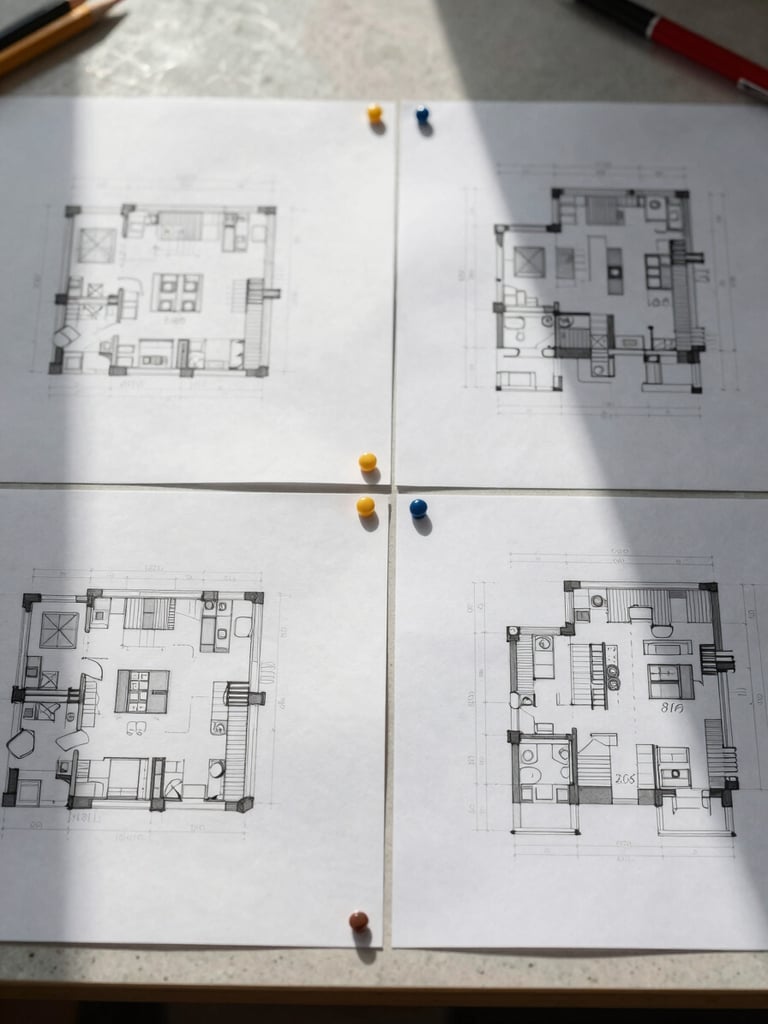
Decisions made visible.
Three rounds of layout exploration. Each version tested whether the constraint could carry the composition on its own — no decoration added to compensate.
The final direction kept only what the constraint demanded. Every element present has a documented reason; nothing is there to fill space.


Measured against the original problem.
The delivered work met every stated requirement. More usefully, the constraint the client feared became the element that made it distinct from comparable work in the same category.